
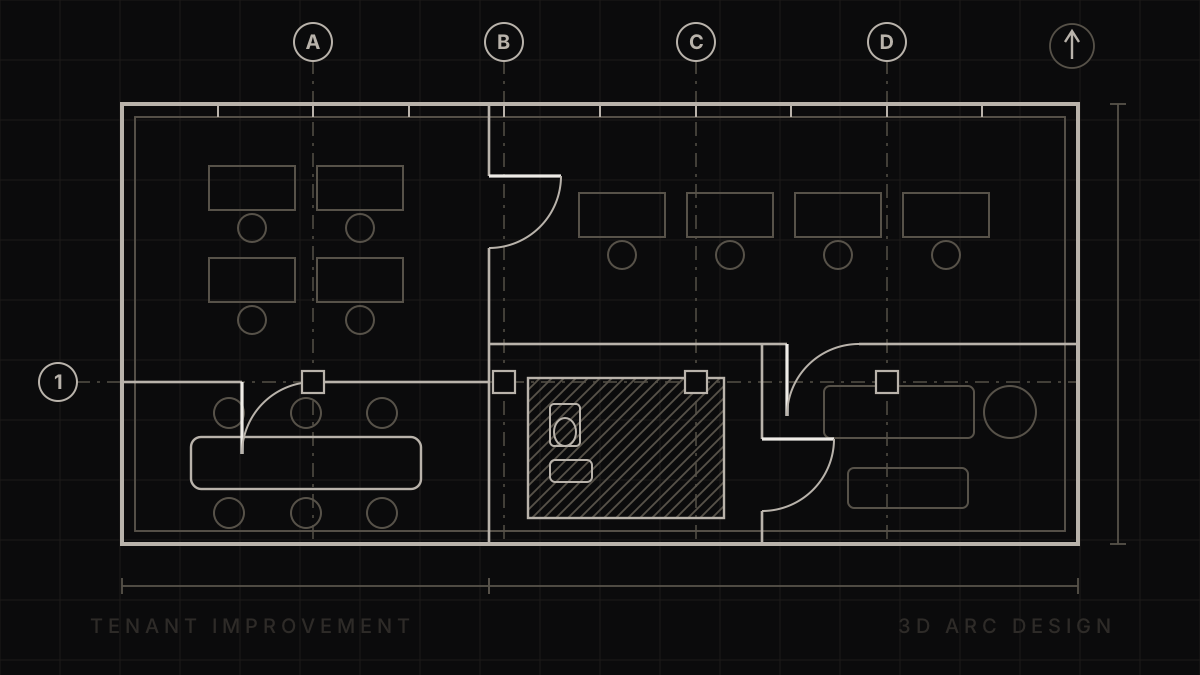
A tenant improvement allowance is a landlord contribution toward renovating a leased commercial space. It can reduce the amount your business ultimately funds, but you need to understand its value, eligible expenses, and payment conditions before treating it as available cash.
BDC describes these allowances as commonly expressed as an amount per square foot. The actual arrangement is negotiated through your lease. Source: BDC commercial leasing terms
Start with the full cost of opening the premises. Then work out how the allowance applies to that budget.
Calculate the headline contribution
Multiply the agreed rate by the area defined in the lease. Confirm the measurement basis with your broker and lawyer rather than assuming the advertised floor area is the contractual amount.
For illustration, a 2,000-square-foot unit with a $40-per-square-foot allowance produces a headline contribution of $80,000. This is an arithmetic example, not a statement of current Metro Vancouver market allowances.
That number is only the starting point. The lease determines which costs qualify and how the contribution is released.
Compare it with your complete budget
Suppose the same business has a hypothetical opening budget of $300,000, excluding taxes for simplicity. If all conditions are met and it receives the full $80,000 allowance, its remaining contribution would be $220,000.
However, if the allowance is reimbursed after completion, the business may have to fund payments before the reimbursement arrives. Its temporary funding requirement can be larger than its final net cost.
Have your accountant or financing adviser help model the timing, taxes, and available funding. The design estimate identifies project costs; it does not determine your financing arrangements.
Check which expenses qualify
Do not assume that every opening expense is eligible. Ask how the lease treats each major category:
- Design and engineering fees.
- Permit and application fees.
- Demolition and construction.
- Built-in millwork and equipment connections.
- Furniture, computers, and other movable items.
- Signage and business equipment.
- Taxes and landlord administration charges.
Use your actual project budget as the checklist. Have any uncertainties resolved in the agreement so the allowance can be matched to specific expenses.
Establish the payment process
Ask your commercial leasing lawyer to explain the reimbursement conditions and deadlines. Useful questions include:
- What documents are needed to request payment?
- Are progress payments available or only a final reimbursement?
- Does the landlord need to approve contractors or quotations in advance?
- What completion evidence or inspection records are required?
- Is there a deadline for spending or claiming the allowance?
- What happens if the actual eligible cost is below the maximum allowance?
Make a payment schedule showing contractor invoices, professional fees, equipment deposits, and expected landlord payments. Assign someone to collect the supporting records as the project proceeds.
Separate cash allowances from landlord work
A landlord may offer to carry out work, provide a cash allowance, or offer other incentives. BDC identifies both rent incentives and landlord-managed improvements as possible lease inducements. Source: BDC leasehold improvement guidance
Compare these arrangements by defining what they deliver. For landlord work, record the scope, specifications, completion date, and responsibility for outstanding items. For a rent incentive, confirm which rent components are affected and when it applies.
Avoid adding the value of landlord work to a cash allowance unless both are actually included. Equally, remove landlord-paid scope from your own construction budget to avoid counting it twice.
Use a preliminary design to support the discussion
An allowance negotiation is easier to assess when you understand the proposed work. A layout, equipment list, and preliminary estimate can identify major gaps between the unit's condition and the needs of the business.
For example, a large contribution may still leave a difficult project if the unit requires substantial service upgrades. A smaller contribution attached to a suitable existing fit-out might result in a lower net investment. Compare the full arrangement, including time and risk.
Should you spend the entire allowance?
Base design decisions on the business needs and lease conditions. Ask whether unused funds have any value to you, but do not add work solely because a headline allowance exists. Additional scope can bring maintenance obligations and schedule consequences beyond its initial price.
Understand the renovation budget before negotiating
Book a free 30-minute consultation with 3D Arc Design. Bring the unit details, proposed business use, and landlord's improvement offer to discuss the design and cost information needed for your next leasing conversation.
We build the budget the allowance gets compared against. See the tenant improvement service or book a free 30-minute consultation.