
Home / Commercial Tenant Improvement / Coquitlam
Commercial Tenant Improvements in Coquitlam
Coquitlam publishes more guidance than most municipalities in the region, and has one gate that can stop a project before it starts.
The Preliminary Plan Approval gate
This is the sentence to read twice. Coquitlam states that a building permit will not be issued if Preliminary Plan Approval is required — and that PPA requirements should be confirmed with Planning and Development before signing a lease or beginning building alterations.
PPA is triggered by changing the use of a business, adding floor area, restaurant seating changes, exterior modifications, parking or landscaping changes, and signage changes. Once granted, the building permit must be applied for within 90 days.
If your project needs PPA and you have already signed, you are paying rent while a planning process runs that you did not budget for.
Fast Track, and exactly what qualifies
Coquitlam runs a Fast Track stream for straightforward commercial tenant improvements, and publishes precise eligibility. It applies to commercial uses in commercial and industrial zones where there is:
- No change of use
- No net increase or decrease to the floor area of the unit or the building’s gross leasable area
- No external modifications, unless a development permit has already been issued
- Only minor plumbing changes associated with replacing existing fixtures
- Single-level racking without stair access, under twelve feet and within the sprinkler system’s design capability
- Minor exterior alterations under $150,000 in construction value
The City does not publish a turnaround time for Fast Track, so treat it as a simpler review rather than a guaranteed fast one.
Racking is a structure
Coquitlam is unusually clear about this, and it catches out warehouse and retail tenants constantly. Shelving that is 8 ft 6 in or taller, or 30 inches or more deep, or two units back to back with a combined depth over 30 inches, counts as racking — and racking is a structure requiring a building permit, whether it is pre-built or assembled on site, fixed or moveable.
The City’s stated reason is seismic: Coquitlam is in an active earthquake zone and racking is a genuine safety risk in one.
Where the permits actually come from
Not all of them are the City’s. Plumbing and sprinkler or fire suppression permits go through Coquitlam. Electrical and gas permits go through Technical Safety BC, which is provincial, not municipal — a different application, a different queue, and one people routinely forget to start.
Fees are based on the value of construction, with 25% payable at application and the balance at issuance. Coquitlam also publishes an unusually large library of subject-specific guides — commercial cooking exhaust, mezzanines, racking, spray booths, accessible washrooms, occupant load changes for liquor establishments — which are worth reading before drawing.
Coquitlam is not Port Coquitlam, and not Port Moody
Three separate municipalities, commonly grouped as the Tri-Cities and constantly confused. Each administers its own building permits with its own bylaw, fees and process. Port Coquitlam, for instance, charges 50% of the fee at application where Coquitlam charges 25%.
The intermunicipal business licence covers mobile businesses across the three. It does not extend a building permit across a boundary.
One thing we could not confirm
Coquitlam publishes a double-fee rule for signs installed before a permit is issued. We could not verify a published double-fee provision for building permits where work started early — the fee bylaw schedule was not publicly retrievable. Confirm it with the Building Permits Division rather than assuming either way. Starting without a permit carries enough other consequences that the question is academic.

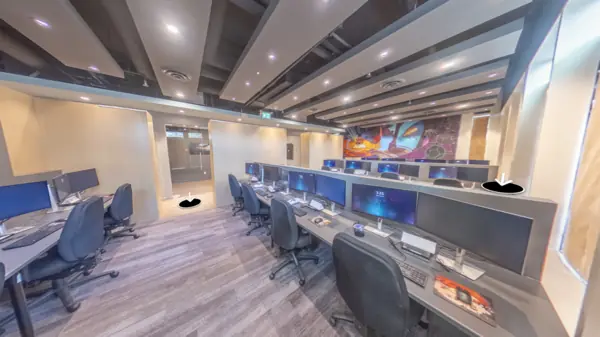
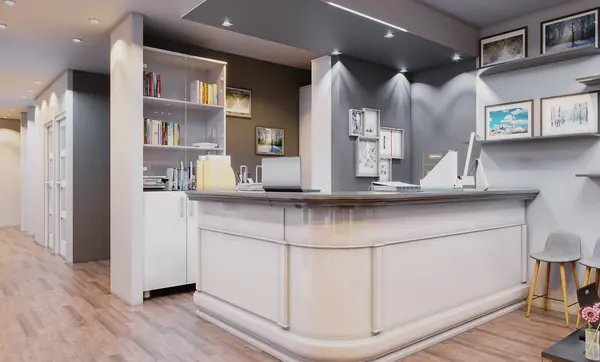
Every municipality runs this differently and the details change. The way to find out what your project actually involves in Coquitlam is to look at the unit before you commit to it: occupant load, exiting, washroom count, ceiling height, and what the existing mechanical and electrical will support.
We do that as a unit feasibility check, and act as the owner's agent on the permit application afterwards, so the city communication and the drawings sit in one place. A registered architect reviews the design for compliance with the building code and the local bylaw, and provides sign and seal where the project requires it.
Where we work and who we build for
By city: Vancouver · Burnaby · Surrey · North Vancouver
By business: Medical & dental clinics · Restaurants & cafés · Daycares & schools · Gyms & wellness studios · Professional offices
Thirty minutes, before you sign anything.
- Free unit feasibility check
- Free test fit where eligible
- Answers on permits and code, not a sales call